Multi-Roof Moisture Mapping and Thermal Analysis
St. Petersburg, FL / 2025 / DGI M300 Drone, RWS, DEC
GeoView was commissioned to evaluate the structural integrity of the north and south PVC roofing systems for a commercial office building in St. Petersburg, FL. The goal was to identify and map specific zones where water had bypassed the protective top membrane and settled into the underlying insulation.
The investigation utilized a comprehensive dual-technology methodology, combining non-destructive electrical impedance scanning with aerial thermal imaging.
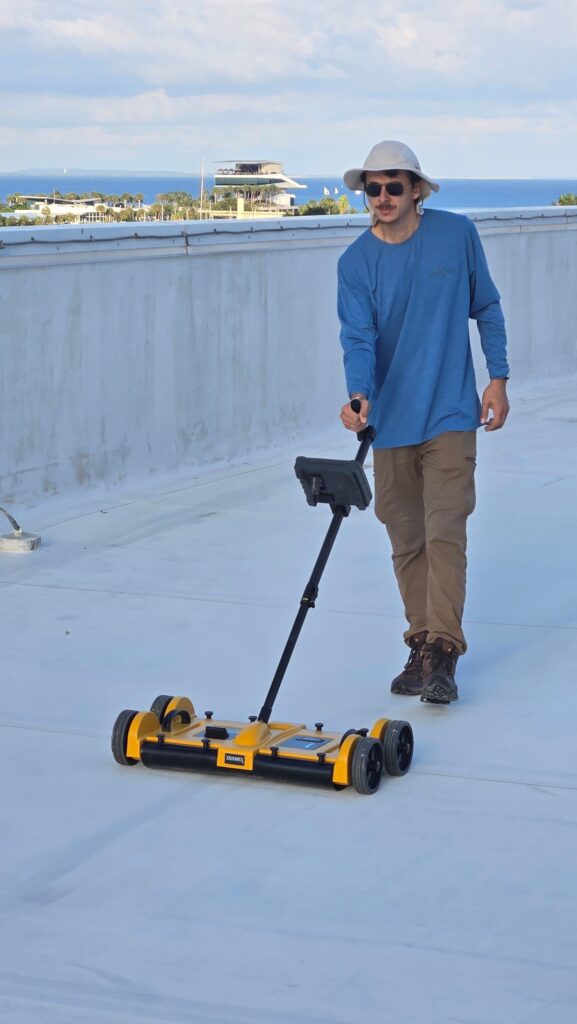
Large open sections were mapped using a Tramex DEC scanner, while a Tramex RWS scanner was used to probe restricted spaces and roof penetrations.
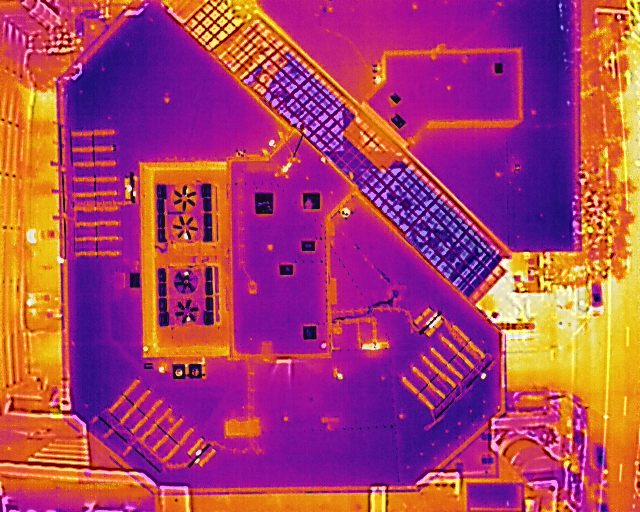
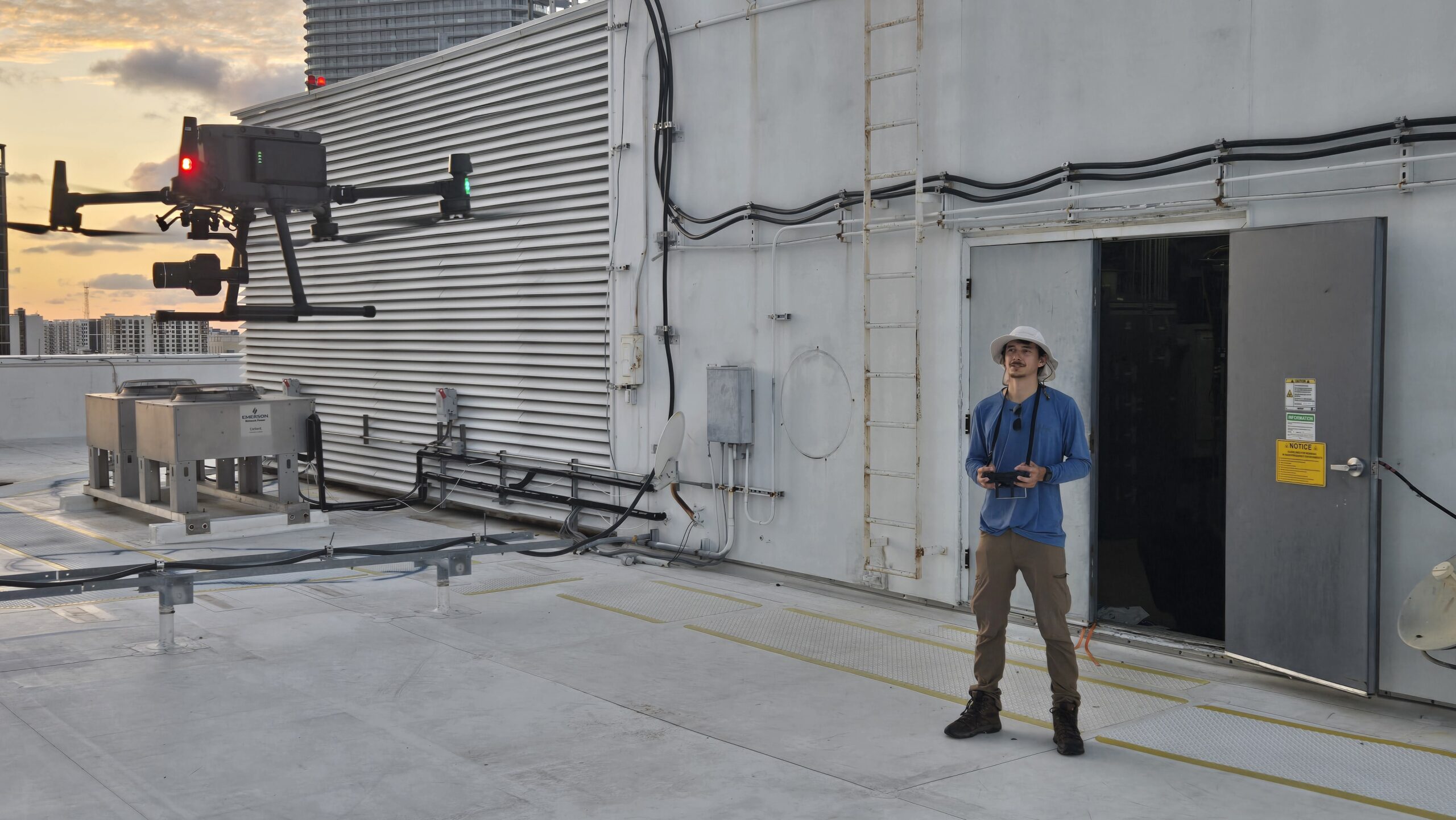
To supplement this data, a DJI M300 drone equipped with a thermal camera captured imagery during the early evening to detect “hot spots” where moist insulation retained solar heat longer than dry materials.
The findings revealed varying levels of moisture across the two structures. The southern roof exhibited moisture beneath the PVC liner in less than 10 percent of its area, primarily clustered around AC and telecom antenna racks, drains, and vertical seams in the parapet walls. The northern roof demonstrated superior integrity, with moisture detected in less than 1 percent of the area, mostly confined to specific roof structures and drains.
Areas of elevated moisture were physically marked on the roof surface with pink spray paint and blue dashed lines to facilitate targeted repairs. While the infrared data provided a supporting overview, the moisture meter results were prioritized as the more reliable data set due to their direct measurement of the electrical properties of the built-up roofing material.