Mapping the Seafloor
The two main techniques used to map the seafloor are bathymetric profiling and side-scan sonar.
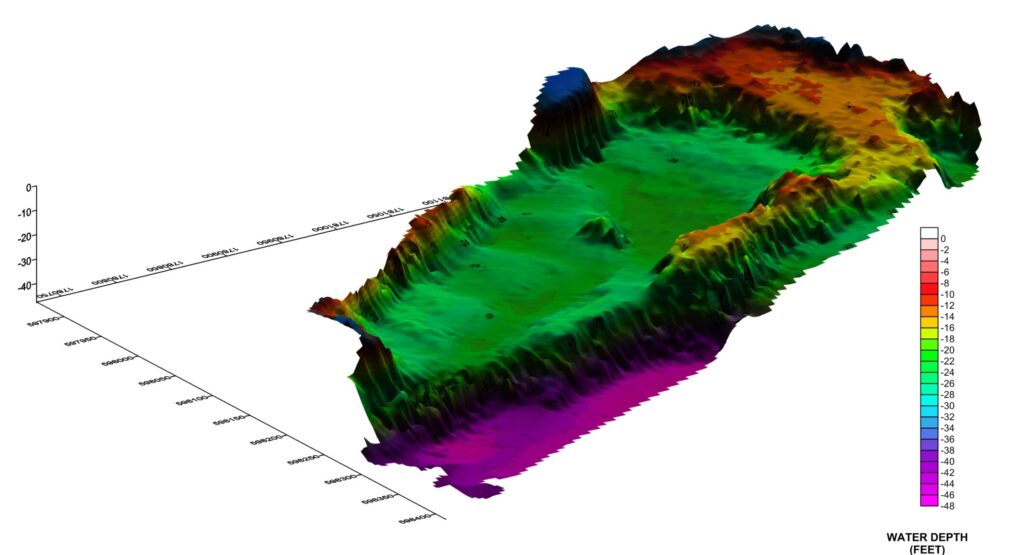
Bathymetric profiling is used to determine water depth and map the elevation of the seafloor. It has been used to map seafloor elevation and water depth prior to construction and dredging activity, map surface expressions of sinkholes, map extents of reefs and map sediment slumps from berm failures. Depending on the target and size of the survey area, the bathymetry data can be collected using either be single beam or multibeam soundings. Single beam sounders emit a single beam of sound downward from the boat to the seafloor and measure the amount of time it takes for the sound to travel through the water, bounce off the seafloor, and return to the sounder. Multibeam echosounders use hundreds of very narrow adjacent beams arranged in a fan-like swath of typically 90 to 170 degrees across. The result is a wide swath of date with just a single data transect.


Side-scan sonar also emits a fan-shaped sonar pulse from the boat down toward the seafloor. The intensity of the acoustic reflections from the seafloor is recorded in a series of cross-track slices to form an image of the seafloor and objects on the seafloor within the swath of the beam.
Side-scan sonar is commonly used to locate potential seafloor hazards such as former bridge piles and wrecks, mapping seafloor utilities, evaluating reefs, mapping sea grass and performing grain size surveys. The high resolution images are capable of imaging objects as small as several inches in size.
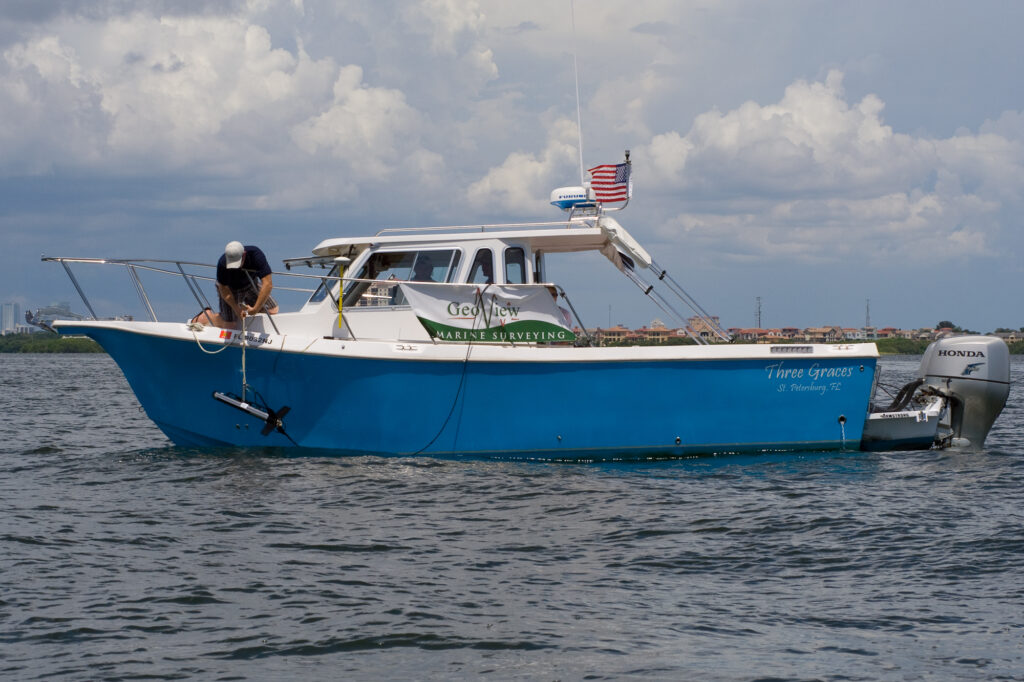
The data from both methods can be corrected for tides and wave action and can be output in most common coordinate systems and vertical datums. The data can be presented in AutoCAD, GIS and/or table formats. With both small and large survey vessels, GeoView has conducted seafloor mapping from small pond and lakes studies to large offshore projects including several projects associated with the expansion of the Panama Canal.
Scanning Beneath the Seafloor
GeoView employs three methods for studying the geologic strata and objects buried beneath the seafloor. These include Sub-bottom profiling, Marine Seismic Refraction and Marine Seismic Reflection.
GeoView owns and operates an Edgetech sub-bottom profiler. It generates a swept frequency source to produce a high resolution image of the sub-bottom at penetration depths up to 50 meters.
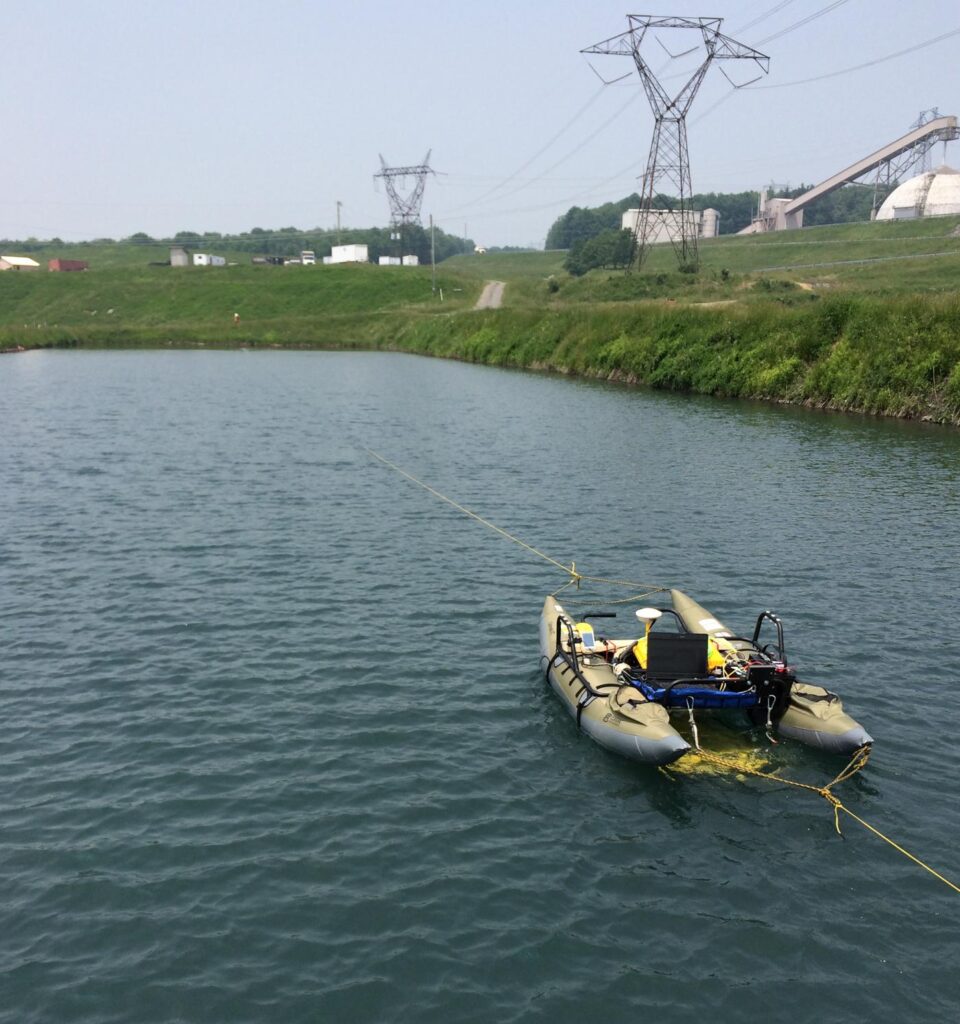
It is useful for mapping sediment thickness, karst surveys, conducting scour studies, mapping shallow geologic strata and mapping buried utilities and other submerged structures. The source and receiver are housed in a single towfish, allowing data to be collected even in very shallow water depths. The depth of penetration can be limited by the grain size of the sediment and porosity of the rock. For freshwater sub-bottom profiling, a ground penetrating radar system can also be used.
Marine seismic refraction is used to map geologic strata and to obtain compressional wave velocities of the sediment and rock. The system utilizes an airgun to produce the seismic wave and a 24-channel seismograph and hydrophone streamer to record the travel times. Seismic reflection utilizes similar equipment, but with a much shorter duration between shots and a higher source frequency. Seismic reflection data generally has a greater depth of penetration and resolution and is therefore useful in mapping geologic strata and identifying fault locations. GeoView teams with Spotlight Geophysical Services for marine Seismic Refraction and Marine Seismic Reflection Surveys.

The data from can be corrected for tides and wave action and can be output in most common coordinate systems and vertical datums. The data can be presented in AutoCAD, GIS and/or table formats. With both small and large survey vessels, GeoView has the ability to conduct both inshore and offshore projects.

Sediment Thickness
Sediment thickness studies are typically performed to:
- Identify and quantify offshore borrow pits
- Survey sediment with channels
- Pre/Post dredging surveys
- Port expansions
- Pipeline studies
- Sand wave and Scour/Erosion Surveys
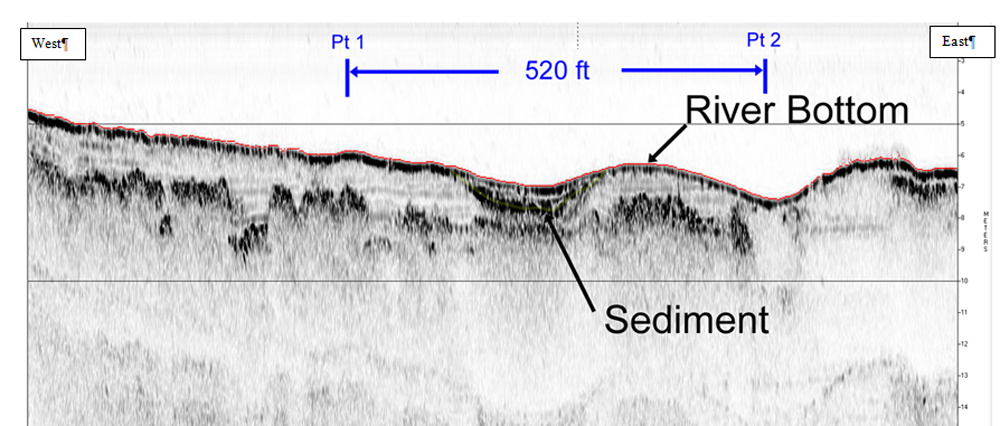
The studies are typically initially performed with a sub-bottom profiling system to produce a cross section of the seafloor and underlying sediments. Exact depths to layers of interest are verified using jet probes or vibracores. Sediment samples are taken with vibracores or ponar samples.