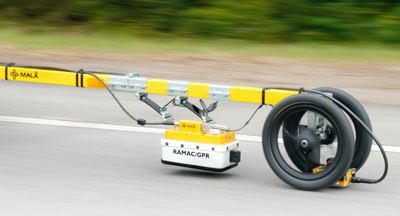
A ground penetrating radar study was performed by GeoView to provide information on pavement thickness of a county road in central Florida. The study area was approximately 5 miles in length and was conducted in both lanes of traffic.
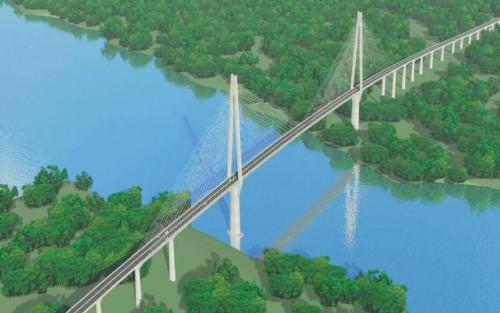
A new set of locks are being installed along the Panama Canal. These locks will double the capacity of Panama Canal and allow 1,200 foot long ships to pass across the isthmus. As part of this expansion, a new bridge was required on the Atlantic side entrance of the Canal. The bridge will be the largest cable-stayed concrete bridge in the world and will allow for unimpeded flow of traffic from Colon to areas west of the canal.
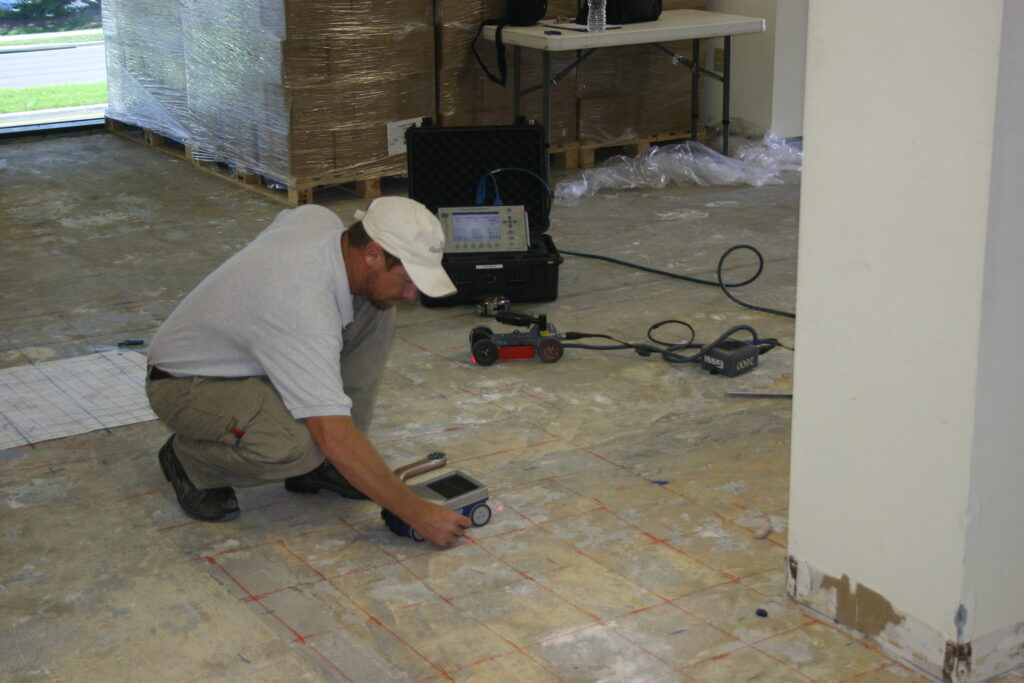
A 1,900 square foot portion of the second story of an office building was being considered for conversion from office space to bulk product storage for a nutritional supplement company. The reinforcement design and thickness of the second floor slab were required for the structural engineers to calculate the loading capacity of the floor. GeoView was tasked to determine the size and configuration of the reinforcing and to determine the thickness of the slab.
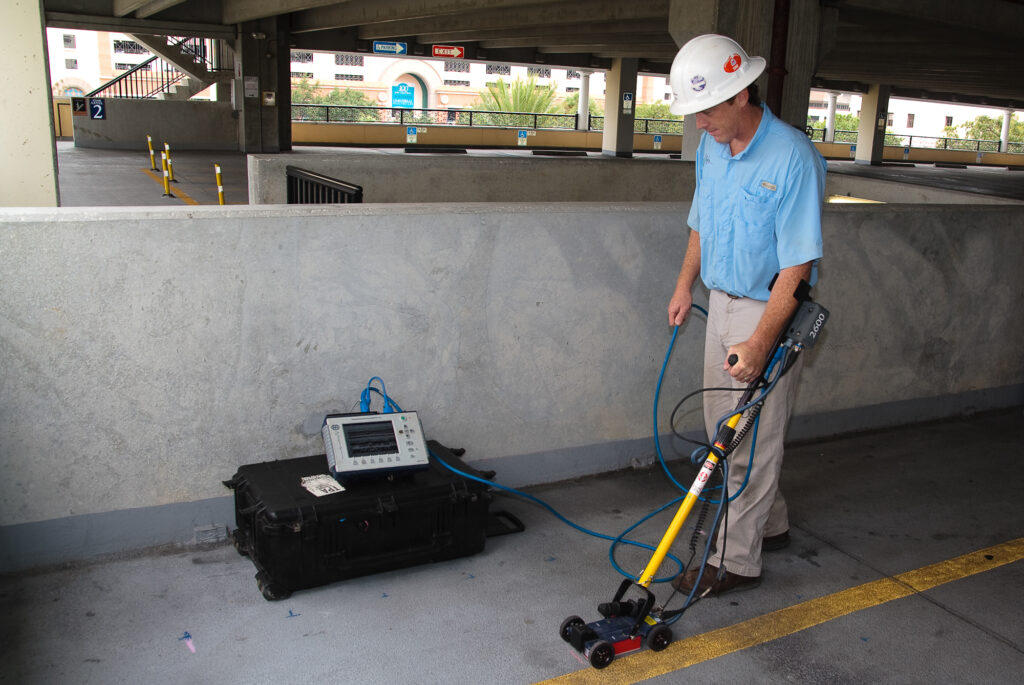
Mapping Rebar and Post Tension Cables
Our client was tasked to install new plumbing lines as part of a building renovation. This task involved drilling cores through each floor of the building. Geoview was contracted to locate the rebar and post tension cables to determine safe coring locations.
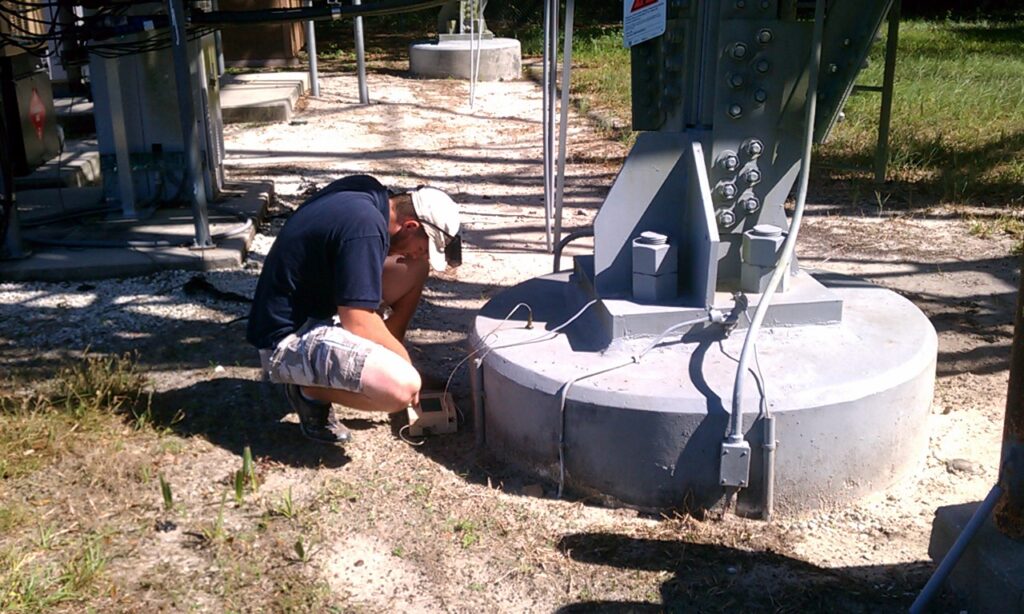
Determining Design of Buried Foundations
Determining the three-dimensional design of foundations for telecommunications towers, buildings and road signs can be impractical and sometimes nearly impossible using conventional means. Properly applied geophysical test methods, hand probing and shallow test pits provide a very cost-effective and non-destructive approach to determining the design of foundations. GeoView has conducted literally 1,000’s of investigations evaluating buried foundations for telecommunication towers across the United States.