Moisture meters operate on the principle of electrical impedance, a non-destructive method for detecting subsurface water. Unlike “pin-type” meters that require puncturing the surface, these devices use large electrode pads on their underside to create a low-frequency alternating electric field. This field penetrates deep into the roofing layers—often up to 10 cm (4 inches).
Since water is a much better conductor of electricity than dry insulation or membrane, any moisture present causes a measurable change in the electrical return signal, which the device then translates into a moisture value on its display.
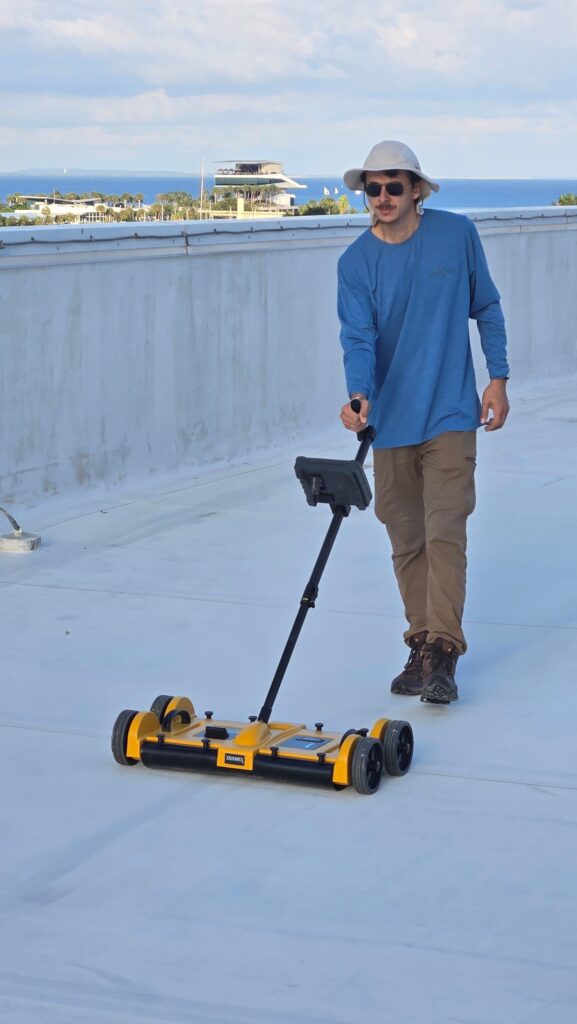
This technology is a cornerstone of preventative maintenance for large-scale commercial buildings. By “mapping” the roof in a grid pattern, an operator can identify exactly where water has infiltrated the system long before a drip appears on the ceiling below. This allows for surgical repairs—replacing only the wet sections of insulation and patching the leak—rather than the massive expense of a full roof tear-off. It is essentially an “X-ray” for building health, providing a clear picture of what is happening beneath the surface without compromising the integrity of the roof’s waterproof seal.