Electromagnetics uses inductive techniques to measure conductivity of the subsurface without the need of electrodes or ground contact. The methods include frequency domain electromagnetics (Geonics EM-31, EM-34, EM-38 and GSSI Profiler), time domain electromagnetics (Geonics EM-61, Geonics PROTEM systems and White handheld systems), and VLF systems. Depending on the target, the depth of investigation can range from a few meters to several hundred meters.
Frequency Domain systems measure the magnitude and phase of an induced current. The readings can be integrated with a sub-meter GPS system to facilitate quick and accurate data collection.
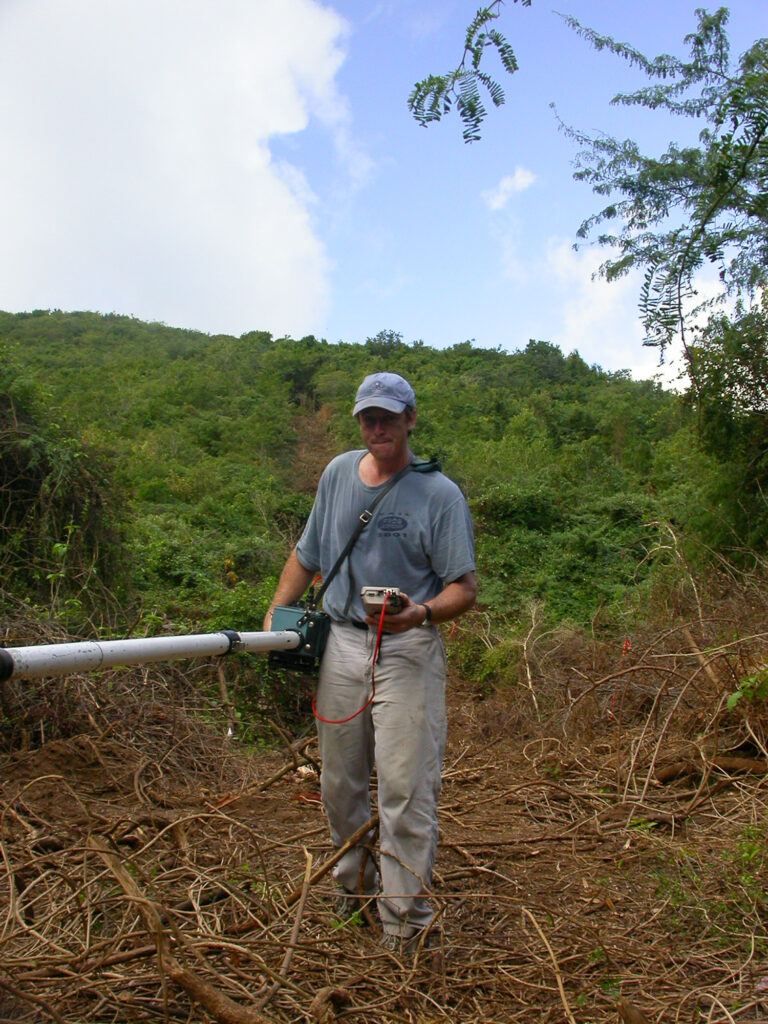
GeoView uses frequency domain electromagnetics to map:
- Metallic buried debris
- Conductive (ionic) ground water contamination
- Archaeological artifacts
- Mine spoils
- Variable geological conditions
Time domain systems generate a pulsed current into the ground and measure the decay rate of a secondary magnetic field to determine the bulk conductivity of the subsurface.
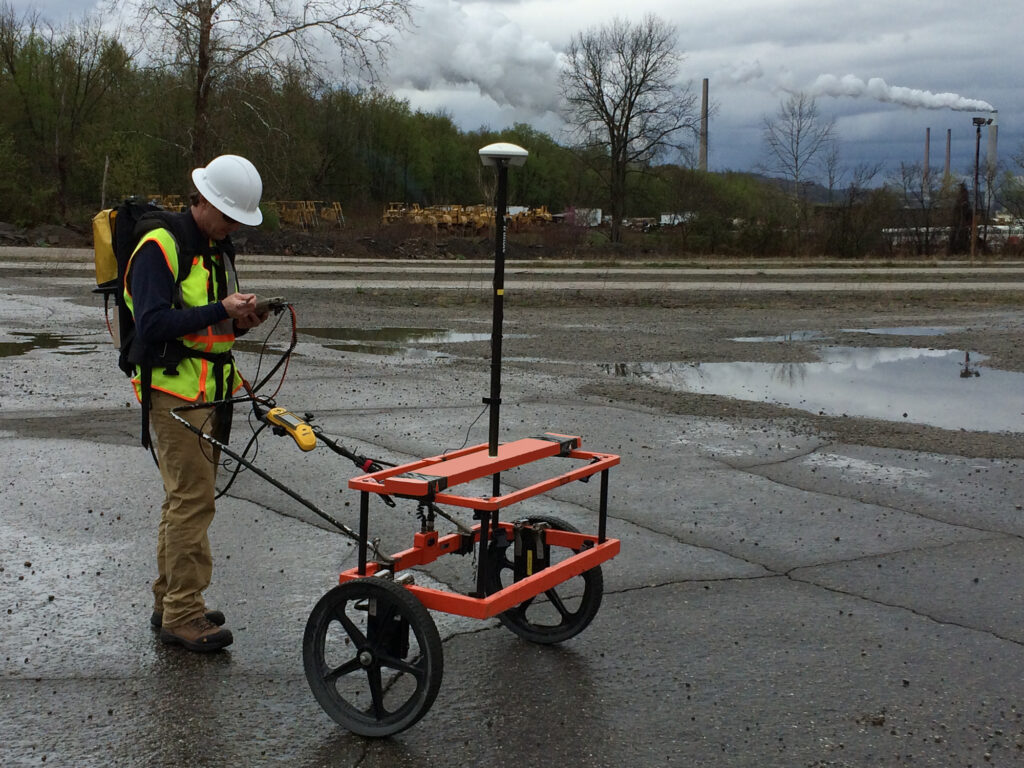
GeoView uses time domain systems to:


- Locate unexploded ordinance
- Locate buried ferrous and non-ferrous metal for environmental and archaeological studies
- Map saltwater plumes
- Determine thickness of contaminate plumes
- Map thickness of geologic strata
- Locate underground storage tanks
VLF systems measure the local tilt and ellipticity of very low frequency broadcasts. VLF data is used to:
- Map water bearing fractures
- Locate ore bodies
- Locate faults